Introductory Scuba Diving: How to Get Started
By Zambian Outdoor Adventure Company · Updated · 7 min read
Introductory scuba diving is a supervised first dive in a pool, led by a qualified instructor, and the easiest way to start scuba diving. In Zambia, beginners can choose Try Scuba (K1,500, from age 6) or Discover Scuba Diving (K2,200, from age 10) with the Zambian Outdoor Adventure Company in Lusaka. Neither option needs swimming ability or experience, and groups are limited to 4 people. After an introductory session, divers can progress to a full day of Pond Scuba and, when the course launches, an Open Water Diver course.
Key takeaways
- Start with a supervised introductory session in a pool
- Try Scuba from age 6, Discover Scuba Diving from 10
- No swimming ability or experience needed
- Progress to Pond Scuba, then an Open Water Diver course (coming soon)
What is the difference between an introductory dive and a certification?
An introductory scuba experience is a supervised dive in a controlled setting, such as a swimming pool, where an instructor stays beside the beginner for the whole session. A scuba certification, such as Open Water Diver, is a full course that teaches the knowledge and skills needed to dive with a buddy without an instructor. Most people start with an introductory dive to find out whether scuba diving suits them before committing time and money to a certification.
In Zambia, the Zambian Outdoor Adventure Company offers two introductory experiences, Try Scuba and Discover Scuba Diving, both in Lusaka pools. Neither one is a certification. An Open Water Diver course at Lake Tanganyika is coming soon, taught by PADI-certified instructors and planned at US$550 or the kwacha equivalent. For example, a beginner might try Discover Scuba Diving in a Lusaka pool, then join the Open Water waitlist once the course dates are announced.
Step 1: Which introductory scuba session should you choose?
Choosing an introductory scuba session in Zambia depends mainly on age and goals. Try Scuba costs K1,500 per person, is open from age 6 and gives a guided first taste of breathing underwater. Discover Scuba Diving costs K2,200, is open from age 10 and adds basic scuba skills plus a digital certificate of participation. Both sessions last 3–4 hours.
Pond Scuba is a third option for groups: a full day of supervised scuba for K2,500 per person, from age 10. All three experiences include equipment, need no swimming ability and are led by PADI-certified instructors in groups of up to 4 people. For example, a child aged 8 would choose Try Scuba, an adult wanting real skills would choose Discover Scuba Diving, and a school or company team would usually choose Pond Scuba.
| Experience | Price | Duration | Min. age |
|---|---|---|---|
| Try Scuba | K1,500 per person | 3–4 hours | 6 |
| Discover Scuba Diving | K2,200 per person | 3–4 hours | 10 |
| Pond Scuba | K2,500 full day | Full day | 10 |
Step 2: How do you book introductory scuba diving in Zambia?
Booking introductory scuba diving with the Zambian Outdoor Adventure Company takes one message. Contact Sid Parmar on WhatsApp (+260 97 972 7627) or use the online enquiry form, and include four details: how many people are diving, their ages, the preferred date and the preferred venue. The company replies within 2 hours to confirm the date, venue and price.
Sessions run at Millennium Village, GOGO Fitness and the Radisson Blu Hotel, or at a customer's own pool, because the instructors can bring all the equipment to a private home. Groups, schools and companies receive a quote on request. For example, a parent planning a birthday can mention the number of children and their ages in the first message, which speeds up the reply. Any medical conditions should also be mentioned when booking, so the instructor can advise whether a doctor's approval is needed before the dive.
Step 3: How should you prepare for an introductory dive?
Preparation for an introductory dive is light. First, pack swimwear and a towel, since the Zambian Outdoor Adventure Company provides all scuba equipment. Second, eat a light meal and drink water beforehand. Third, avoid alcohol before the session. Additionally, anyone with a cold, flu or blocked nose should reschedule, because congestion makes equalising the ears difficult.
Finally, tell the instructor about any medical condition before diving. Some conditions need a doctor's approval first. Reading about the session in advance also helps nervous beginners: knowing the order of events, from the safety briefing to the first breath underwater, removes most of the uncertainty. In practice, beginners who arrive rested and relaxed find the first breaths underwater come more easily, and they spend more of the session enjoying the water rather than worrying about it.
Step 4: What happens during the introductory session?
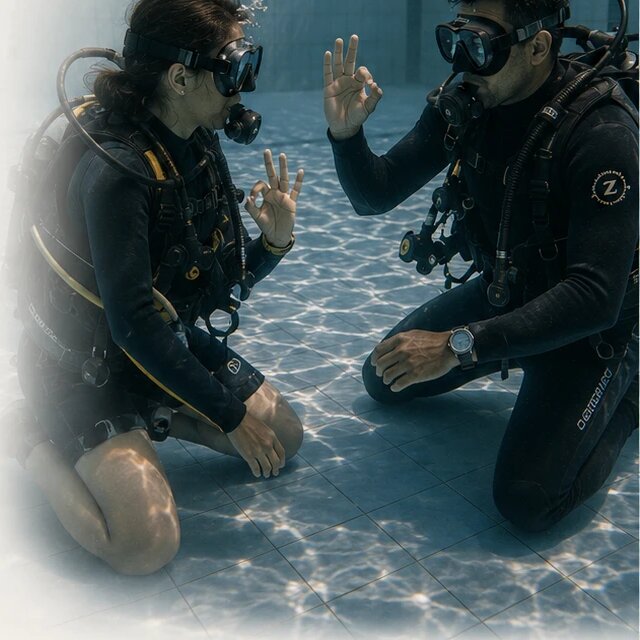
An introductory scuba session with the Zambian Outdoor Adventure Company lasts 3–4 hours and follows a clear order. First, a PADI-certified instructor gives a safety briefing on dry land covering the equipment, hand signals and the rule to never hold your breath. Second, the instructor fits the mask, buoyancy jacket and cylinder.
Third, divers take their first breaths in water shallow enough to stand in, at their own pace. On Discover Scuba Diving, the instructor then introduces basic skills such as clearing the mask and recovering the regulator. Finally, divers spend time moving around the pool, and Discover Scuba Diving participants receive a digital certificate of participation. With a maximum of 4 people per group, the instructor can adjust the pace for every diver. For example, a nervous diver can stay in shallow water longer while others move deeper.
Step 5: Where can you go after an introductory dive?
After an introductory dive, beginners in Zambia can keep progressing with the Zambian Outdoor Adventure Company in three ways. First, Pond Scuba offers a full day of supervised scuba for K2,500 per person, from age 10. Second, divers can join dives at Chisamba, Mulungushi Dam, Tiffany's Canyon and Lake Tanganyika, including Lake Tanganyika, where the company's base at Isanga Bay near Mpulungu has 25 mapped dive sites.
Third, the Open Water Diver course at Lake Tanganyika is coming soon, taught by PADI-certified instructors and planned at US$550 or the kwacha equivalent. The course is designed for people who want to dive with a buddy rather than under direct instructor supervision. Joining the waitlist means hearing the course dates before the public announcement. In practice, many divers return for a second pool session first, then decide on open water once breathing underwater feels natural.