
Scuba Diving Safety for Beginners
By Zambian Outdoor Adventure Company · Updated · 7 min read
Beginner scuba diving is a supervised activity that can be safe when the dive takes place in a controlled setting with a qualified instructor and a few simple rules: breathe continuously and never hold your breath, equalise the ears early and often, move slowly and stay with the instructor. Beginner sessions with the Zambian Outdoor Adventure Company take place in a pool or pond, start with a safety briefing and are led by PADI-certified instructors, with no more than 4 participants per group.
Key takeaways
- Never hold your breath underwater
- Equalise your ears early and often
- Move slowly and stay with your instructor
- Don't dive when unwell, and declare medical conditions
Why should you never hold your breath while scuba diving?
Never holding your breath is the most important rule in scuba diving. Air in the lungs expands as a diver rises toward the surface, because water pressure decreases. A diver who holds the breath while ascending traps that expanding air inside the lungs, which can cause a serious lung injury, even in a few metres of water.
The solution is simple: breathe slowly and continuously the whole time underwater, in and out through the regulator. Slow, steady breathing also uses less air and keeps a diver calm. For example, a beginner who feels the urge to hold the breath when nervous can focus on exhaling gently and listening to the bubbles. Every safety briefing with the Zambian Outdoor Adventure Company covers this rule before anyone enters the water, and PADI-certified instructors watch each diver's breathing pattern during the session. In practice, the rule becomes automatic within the first few minutes underwater.
How do you equalise your ears safely?
Equalising the ears balances the air pressure inside the ears with the increasing water pressure outside as a diver descends. The standard technique is to pinch the nose through the soft part of the mask and gently blow against the closed nose. Swallowing or moving the jaw also works for some divers.
Safe equalisation follows three habits. First, start equalising at the surface and repeat often, before any pressure or discomfort appears. Second, never force equalisation by blowing hard, because forceful attempts can injure the ear. Third, if the ears hurt, stop descending, signal the instructor, rise slightly and try again. Divers with a cold, flu or blocked sinuses should not dive, since congestion prevents the ears from equalising. In practice, ear discomfort is the most common problem on a first dive, and early, gentle equalising prevents almost all of it for beginners in a pool.
Why does going slowly make scuba diving safer?
Going slowly is one of the simplest safety habits in scuba diving. Slow movements and slow breathing use less air, keep the heart rate down and make it easier for a diver to control position in the water. A calm diver also notices small problems, such as ear pressure or a leaking mask, early enough to fix them.
Ascending slowly matters too, because a controlled ascent gives the body time to adjust to falling pressure and helps the diver keep breathing normally. For example, a beginner who kicks hard and rushes toward the surface is more likely to hold the breath by accident. On beginner sessions with the Zambian Outdoor Adventure Company, the instructor sets the pace for the group of up to 4 people, and nobody is pushed deeper or faster than feels comfortable. In practice, the best first dives are unhurried, with plenty of time to settle into breathing underwater.
Why should beginners stay with the instructor and use hand signals?
Staying close to the instructor is a core safety rule for every beginner diver. On sessions with the Zambian Outdoor Adventure Company, a PADI-certified instructor leads each group of up to 4 people and keeps every diver within reach. Speech is impossible underwater, so divers communicate with hand signals taught in the safety briefing.
The four essential signals are OK, something is wrong, go up and go down. The OK signal is a circle made with the thumb and index finger. Something is wrong is a flat hand rocked from side to side, followed by pointing at the problem, such as an ear. Go up is a thumbs-up, and go down is a thumbs-down. For example, a diver with ear pressure gives the something-is-wrong signal, points at the ear and waits for the instructor. In practice, clear signals let an instructor solve small problems before they become big ones.
When should you not go scuba diving?
Knowing when not to dive is as important as knowing how to dive. Beginners should postpone scuba diving when suffering from a cold, flu or blocked sinuses, because congestion stops the ears from equalising and can cause pain or injury. Nobody should dive after drinking alcohol, which affects judgement and coordination.
A diver who feels unwell, exhausted or genuinely unwilling should not dive either; a first dive works best when the person wants to be there. Finally, anyone with a medical condition should tell the instructor before the session, because some conditions need a doctor's approval before diving. For example, a participant with a heart or lung condition should check with a doctor first. The Zambian Outdoor Adventure Company would always rather reschedule a session than put a diver in the water on the wrong day. This guide is general information, not medical advice.
How does the Zambian Outdoor Adventure Company keep beginner sessions safe?
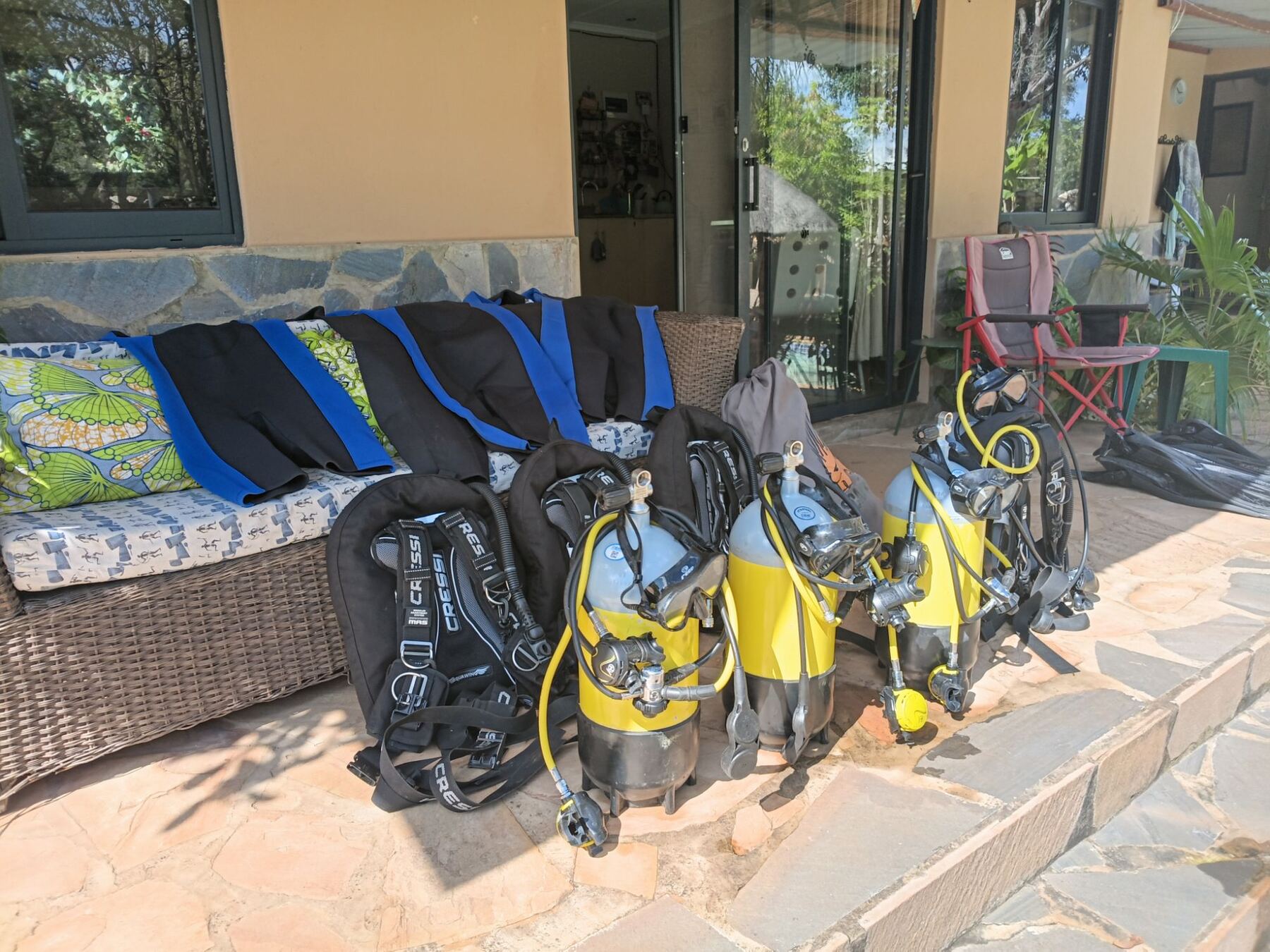
The Zambian Outdoor Adventure Company runs every beginner scuba session with five safety measures. First, each session is led by PADI-certified instructors, with Hennie Smit and Jonathan Chiwenu teaching in Zambia. Second, each group has a maximum of 4 participants, so an instructor can keep every diver within reach. Third, every session starts with a safety briefing on dry land covering equipment, hand signals and breathing.
Fourth, beginner sessions take place in a controlled setting, either a pool in Lusaka or a pond, rather than open water. Finally, all scuba equipment is provided, fitted and checked by the instructor before the dive. Try Scuba is open from age 6 and Discover Scuba Diving from age 10, and neither requires swimming ability. For example, a nervous adult can spend as long as needed in shallow water before moving on. In practice, small groups and a controlled setting make the first dive calm and unhurried.
| When | What to do |
|---|---|
| Before | Rest, eat lightly, no alcohol, declare medical conditions |
| In the briefing | Learn the hand signals and ask questions |
| Underwater | Breathe continuously, equalise early, move slowly, stay close |
| If something feels wrong | Signal your instructor straight away |
This guide is general information for beginners, not medical advice.